The eternal, living Guru

The Eternal Guru.

Not a relic. Not merely a holy book. The Guru Granth Sahib Ji breathes as a living Guru, given its own room, put to rest each night, awakened each morning, and consulted for guidance that reaches every Sikh, on every continent, on the same day.

Not a book, a presence

A Guru who is living, not read.

Sikhs do not merely read the Guru Granth Sahib Ji, they live alongside it. It is treated exactly as a living Guru would be: never left overnight without ceremony, never opened without reverence, and always the final word in a family's or a community's most important decisions.

Sachkhand

A room of its own

In every Gurdwara, the Guru Granth Sahib Ji rests in the Sachkhand, the Realm of Truth, a dedicated space fit for a sovereign, never shared with anything else.

Sukhasan

Put to rest each night

Each evening the Guru is ceremonially closed, carried to its resting place and put to sleep, Sukhasan, with the same care shown to a living teacher.

Parkash

Awakened every morning

Before dawn, the Guru is ceremonially opened, Parkash, "manifestation of light", and takes its seat again to guide the sangat through the new day.

Hukamnama

The daily directive

A verse read at random each morning becomes the Hukamnama, literally "the Guru's order", read aloud in Gurdwaras worldwide as one shared word from the Guru to every Sikh, on the same day.

A copy of the Guru Granth Sahib Ji sits permanently in the Akal Takht in Amritsar, the seat of temporal Sikh authority. No major decision affecting the Sikh community, a resolution, a call to action, a matter of faith, is considered settled without its own Hukamnama.

How the eternal Guru was written

Compiled by hand. Sealed by faith.

The Guru Granth Sahib Ji was not written by one hand or in one sitting. It was gathered across generations, then formally closed, by the Guru who wrote its final words.

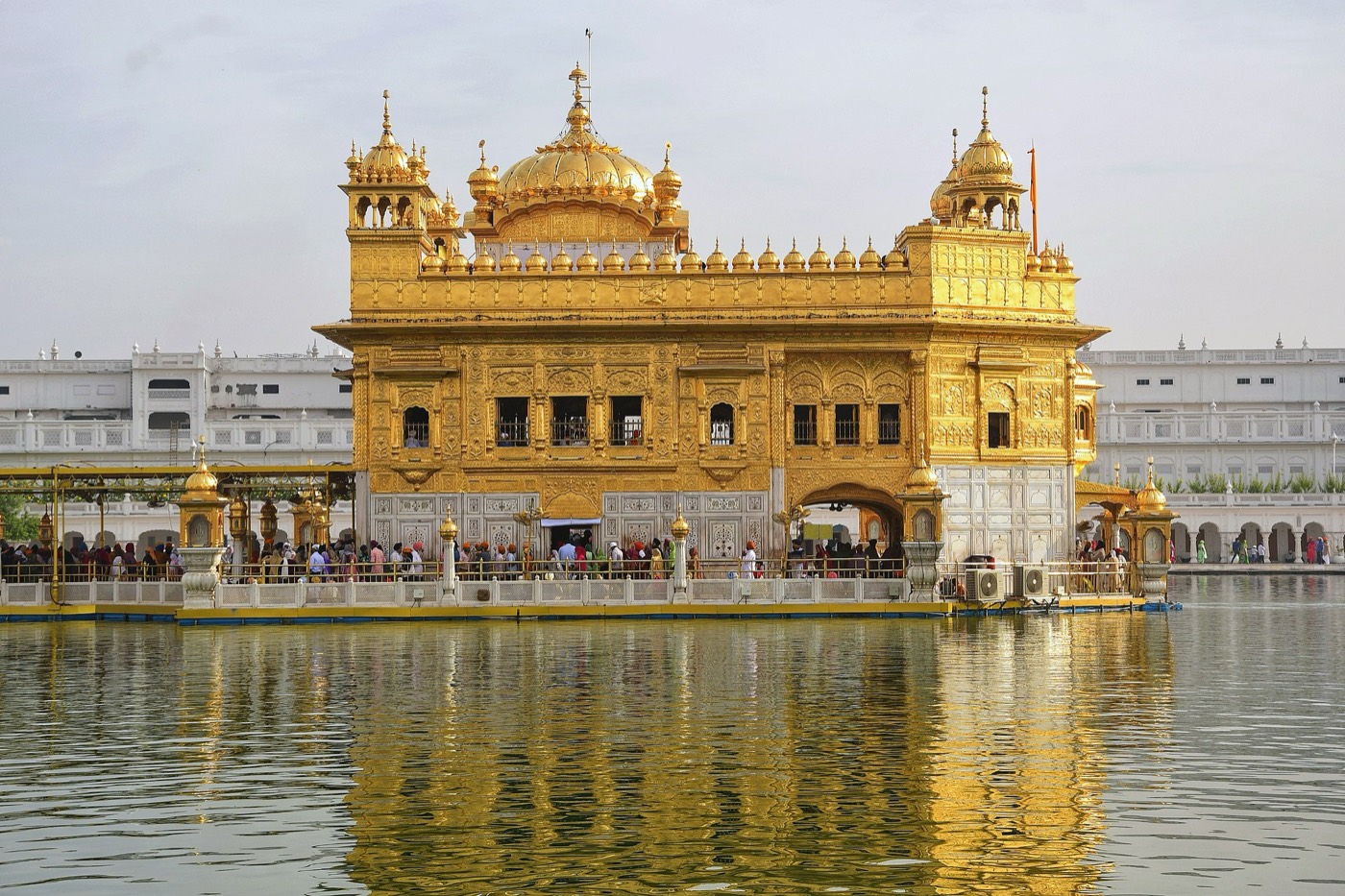
The Golden Temple (Harmandir Sahib) in Amritsar, where the Adi Granth was first installed in 1604
Harmandir Sahib, Amritsar, where the Adi Granth was installed as the heart of Sikh worship, 1604

The scripture, by the numbers

Every page counted. Every voice kept.

1,430
Angs
5,894
Shabads (hymns)
36
Contributors
7
Languages woven in
1
Script, Gurmukhi

Its 1,430 sections are called Angs, "limbs", never "pages." A small word, chosen on purpose: this is a body, not paper.

Languages inside its pages
Punjabi Hindi Sanskrit Persian Marathi Old Lehndi Sindhi
36 contributors, Muslims, Hindus and Sikhs
Sheikh Farid
Muslim Sufi saint
Kabir
Weaver-poet, born into a caste denied temple doors
Namdev
Hindu bhakti poet-saint
Ravidas
Hindu poet-saint
Surdas
Hindu poet-saint

1604, before "inclusive" was even a word

When Guru Arjan Dev Ji placed Sheikh Farid's Sufi verses and Kabir's poems inside the same sacred pages as his own, a Muslim saint and a weaver born into a caste denied entry to temples, sitting word for word beside a Guru, he was not making a gesture. He was making a claim: that truth speaks in every tongue, from every background, and none of it needs permission.

The only scripture on earth holding the words of saints from multiple faiths and castes, as equals, on the same page

Words worth knowing

Five ideas at the heart of the Guru Granth Sahib Ji

The opening verse, and the foundation of everything after it

The Mool Mantar

Every copy of the Guru Granth Sahib Ji opens with the same lines. Sikh children learn them early, often before they can read, because everything else in the scripture rests on them.

ੴ ਸਤਿ ਨਾਮੁ ਕਰਤਾ ਪੁਰਖੁ ਨਿਰਭਉ ਨਿਰਵੈਰੁ ਅਕਾਲ ਮੂਰਤਿ ਅਜੂਨੀ ਸੈਭੰ ਗੁਰ ਪ੍ਰਸਾਦਿ ॥

Ik Onkar, Sat Naam, Karta Purakh, Nirbhau, Nirvair, Akaal Moorat, Ajooni, Saibhang, Gur Prasad.

  • Ik OnkarThere is one God, one creative force running through everything that exists.
  • Sat NaamTruth is its name. What is real does not change to suit us.
  • Karta PurakhThe creator, present inside creation rather than watching from somewhere far off.
  • Nirbhau, NirvairWithout fear, without hatred. Two words that rule out bullying and revenge in one breath.
  • Akaal MooratBeyond time. Not born, not dying, not aging.
  • Ajooni, SaibhangNever taking human birth, self-existent, owing its being to nothing else.
  • Gur PrasadKnown through the Guru's grace, not bought, earned or inherited.

Read it as a single sentence and a claim appears: if one force made everyone, then no person can be born above another. Equality, in Sikhi, is not a policy added later. It is the first line.

Where Seva begins

Twenty rupees, and the true bargain.

Guru Nanak Dev Ji was a young man when his father handed him twenty rupees and sent him to a nearby town, telling him to do business with it and come home with a profit. On the way he met a group of holy men who had gone days without eating. He spent every rupee on food for them and walked home with nothing.

His father was furious. Guru Nanak Dev Ji answered that he had made the only trade worth making, and the place where he fed them is called Sacha Sauda to this day, "the true bargain." A gurdwara stands on that spot in Pakistan now.

That story sits underneath everything on this page. The Guru Granth Sahib Ji does not treat service as a nice addition to belief. It treats feeding a hungry person as the belief itself, put into practice. It is why every gurdwara on earth runs a free kitchen, and why no one is asked their religion, their caste or their income at the door.

Truth is the highest virtue, but higher still is truthful living.

Guru Nanak Dev Ji, Guru Granth Sahib Ji, Ang 62

The four rounds of the Anand Karaj

Four hymns. One union.

Guru Ram Das Ji, the fourth Guru, composed the Lavaan, four wedding hymns sung as a couple circles the Guru Granth Sahib Ji, once for each verse. Each round marks a stage the soul travels on its way to becoming one with another, and with God.

01

Detachment

The couple is called to loosen its grip on worldly bonds and seek the blessing of God as the true foundation of the life now beginning.

02

Reverence

The fear of separation from God dissolves; the soul fills with a divine bliss the couple now carries into their shared life.

03

Devotion

The mind detaches further from worldly desire, absorbed instead in a deep and growing spiritual love, for the divine, and for one another.

04

Union

The soul finds lasting peace. Divine union is complete, as a river, after its whole journey, finally merges into the ocean.

More on Punjabi weddings →

The rhythm of a Sikh's day

Prayers for morning, evening and night.

Three windows of the day, three sets of Banis, recited quietly at home or aloud in the Gurdwara, threading the Guru Granth Sahib Ji through daily life from first light to last.

Morning, Amrit Vela

  • Japji Sahib
  • Jaap Sahib
  • Tav-Prasad Savaiye

Evening

  • Sodar Rahiras Sahib

Night

  • Kirtan Sohila

Built for ages 9 and up, at home, in class or at the gurdwara

Living the values, not just reading them.

The Guru Granth Sahib Ji was never meant to stay on the page. Here are three ways to take what it teaches and actually do something with it this week. Teachers and parents can run all three as they are.

01

Plan a Seva project

Pick one real need near you and meet it. Small and finished beats big and imagined.

  1. Choose the need: a food drive, a park or block cleanup, cards for a seniors home, or a warm clothing collection before winter.
  2. Name a date and a place, then work out what you need to bring.
  3. Invite people. Family, a class, a sports team, the sangat at your gurdwara.
  4. Do it, then write down two things: what changed for someone else, and what changed in you.

The point is not the size of the project. Guru Nanak Dev Ji fed a handful of hungry men and it is still being talked about five centuries later.

02

Art and expression

Make something that shows Ik Onkar, one force in everything, without using any words.

  1. Build a collage of faces, places and living things cut from magazines or printed photos.
  2. Arrange them so they flow into one shape. A circle, a river, a tree, a single ੴ.
  3. Use one colour that runs through every part of the piece, tying it together.
  4. Show it to someone and ask what they notice first, before you explain anything.

Try it as a class mural where every student contributes one panel, then the panels are joined into a single image.

03

Reflection circle

Sit in a circle so no one is at the head of it, which is the whole idea of pangat. Then talk.

  1. When did someone treat you as an equal when they did not have to? How did it feel?
  2. Where do you see people being ranked above each other at school, online or in sport?
  3. The Mool Mantar says nirvair, without hatred. What is one grudge you could put down?
  4. What is one thing you could do for someone this week with no chance of being thanked for it?

One rule: no one has to speak, and no one gets interrupted. Everyone in the circle is equal, including the adults.

Keep reading

Resources and further reading.

Every link below is free to use. The first group lets you read the scripture itself, line by line, in Gurmukhi with English translation.

Read the scripture

  • SriGranth.orgAll 1,430 Angs, searchable, with word by word English translation and transliteration.
  • SikhiToTheMaxSearch any line of Gurbani in Gurmukhi or English. The tool most gurdwaras project on screen.
  • SearchGurbaniGuru Granth Sahib Ji alongside the Dasam Granth and the writings of Bhai Gurdas.

History and archives

For younger readers

A note for teachers and parents: where this page states something as established fact it is sourced above. Where Sikh tradition and academic history differ, we have said so rather than smoothing it over.