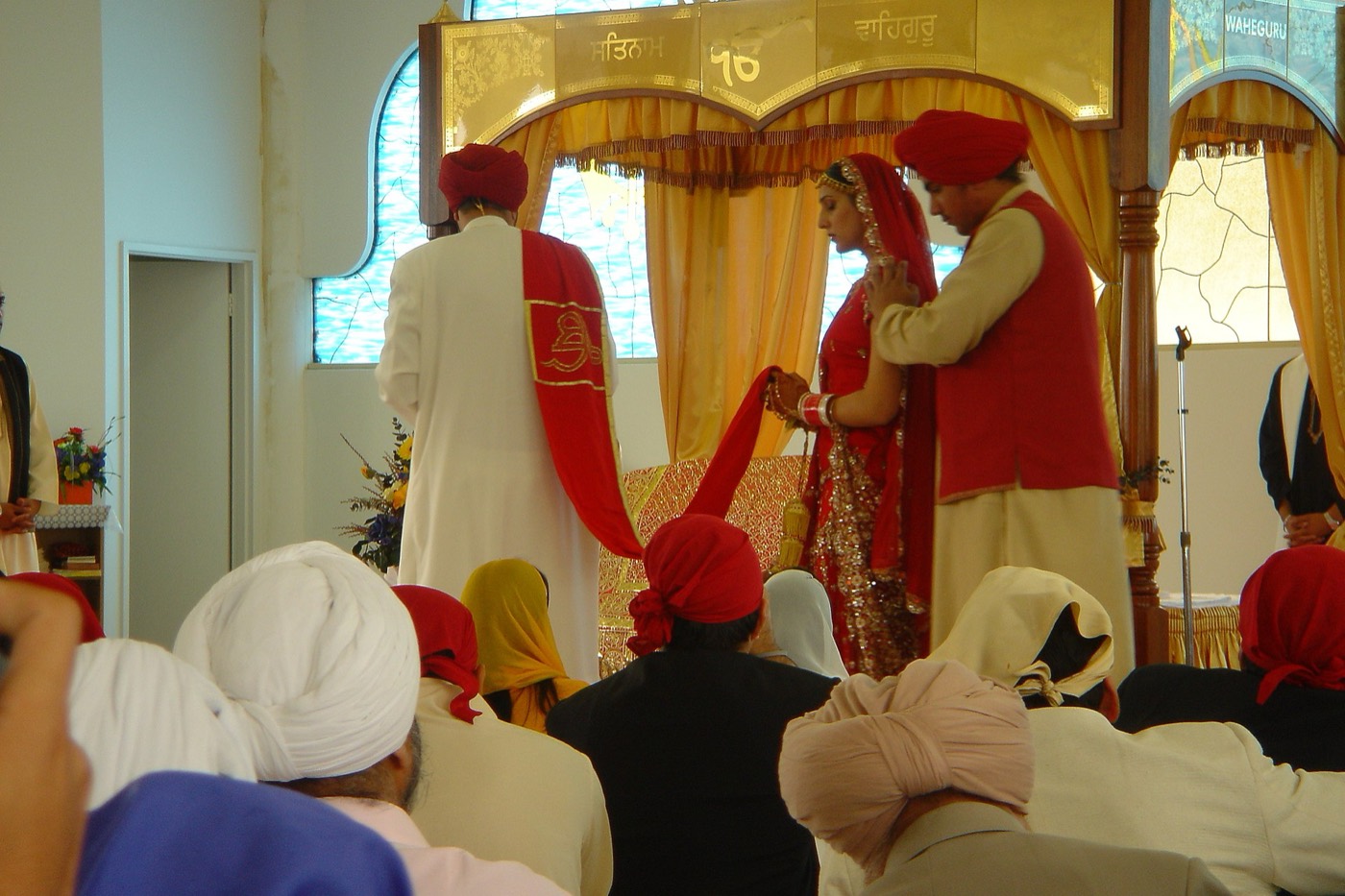
Anand Karaj, Blissful Union
More than a wedding, the Anand Karaj is a sacred bond witnessed not by a single officiant, but by the eternal Guru Granth Sahib Ji and the whole Sangat. Here is everything you need to understand it, attend it, and honour it: its origins in 1577, the fifteen steps that make a marriage whole, and what it means to be a guest in the Guru's house.
Where it began
A union built on scripture, not custom, the Anand Karaj has stayed almost unchanged for over four hundred years.
Anand Karaj means "Blissful Union." It was established by Guru Amar Das Ji in 1559, built around his own composition, the Anand hymn, as a distinct Sikh wedding ceremony, separate from the customs around it.
The four Lavaan, the rounds taken around the Guru Granth Sahib Ji that form the heart of the ceremony, were composed nearly two decades later by Guru Ram Das Ji in 1577.
The ceremony takes place in the presence of the Guru Granth Sahib Ji, the couple marries before their Guru and the entire Sangat, not just their families. There is no priest. There is only Waheguru, the Word, and the witnesses gathered around it.
Step by step
From the first ritual bath at home to the couple's first prayer as husband and wife, the full arc of an Anand Karaj day.
The ritual bath taken by the bride and groom on the morning of the wedding, a purification before the sacred vows ahead.
A prayer offered at home before leaving for the Gurdwara, asking Waheguru's blessing on the day.
The groom's baraat and both families travel to the Gurdwara together, often with dhol and a joyful procession.
The two families formally meet and greet at the Gurdwara entrance, exchanging garlands as two families become one.
The bride's father places one end of a saffron scarf, the palla, in the groom's hand and the other in his daughter's, joining them before the Guru.
Morning hymns of Guru Nanak Dev Ji are sung, setting a devotional tone before the vows begin.
The bride and groom circle the Guru Granth Sahib Ji four times, each round a vow of the marriage's spiritual and worldly duties.
The "Hymn of Bliss," composed by Guru Amar Das Ji, is recited to mark the completion of the union.
A congregational prayer of thanks and blessing offered for the newly married couple.
A verse read at random from the Guru Granth Sahib Ji, received as divine guidance for the couple's life together.
Blessed sweet offering distributed to the couple and the entire Sangat, sealing the ceremony in shared grace.
The bride's emotional departure from her parents' home, symbolizing her new chapter, rarely a dry eye in the room.
Family and friends gather to celebrate with food, music and dancing late into the night.
A shared community meal served to everyone present, regardless of faith or status, Seva in its purest form.
The husband and wife offer their first prayer together, stepping into married life side by side.
Composed in 1577
Composed by Guru Ram Das Ji in 1577, the four Lavaan are the heart of the Anand Karaj, four rounds around the Guru Granth Sahib Ji, each a step deeper into a shared spiritual life.
Detach from worldly bonds and seek God's divine blessing for this union.
The fear of God is removed, the soul is filled with divine bliss.
The mind becomes detached from worldly desire, absorbed instead in spiritual love.
The soul finds peace, the divine union is complete, as a river merges into the ocean.
Respect the space
The Gurdwara is a sacred space before it is a wedding venue. Dress with modesty and reverence, for yourself, and for the Guru Granth Sahib Ji.
For all guests: heads covered, scarves and dupattas are provided at the Gurdwara entrance, and shoes removed before entering.
A quick guide
Simple courtesies that go a long way inside the Darbar Sahib.
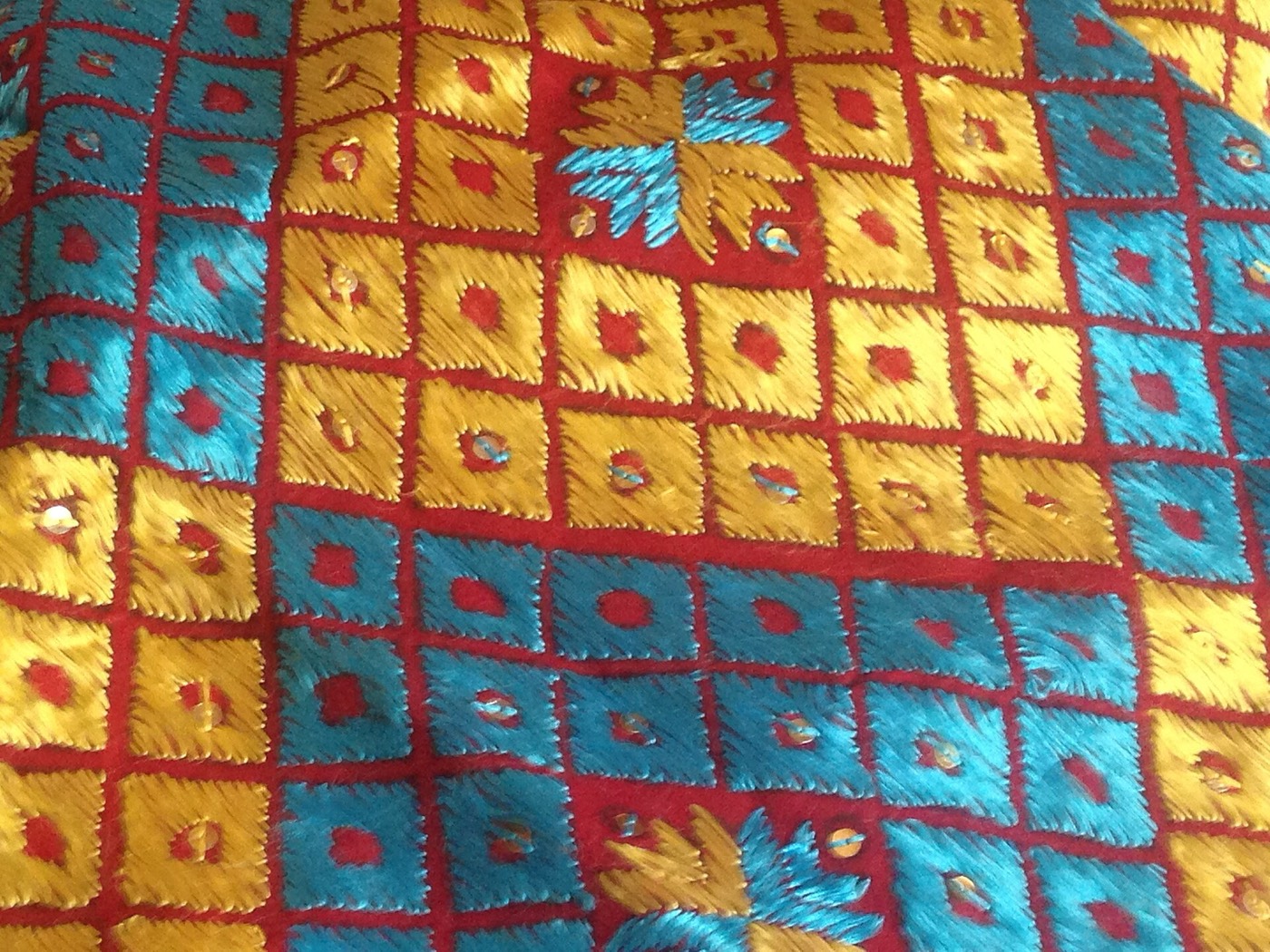
Stitched from our soil
Phulkari, "flower work", is the hand-embroidered shawl passed down through generations, worn by the bride's family through every ceremony leading up to the Anand Karaj.
Before the big day
The Anand Karaj is the final act of a joyful, days-long build-up. Every family does it a little differently, but these are the touchstones.